Behind the Book

Meet Me at the Ruins

A contemporary story of study abroad, anxiety, desire, and the small moments that help a young woman find her footing.

Luna Westish shares the personal origin behind this Scotland-set novel, where overthinking, messy connection, and everyday pleasures matter as much as plot.

contemplative self-reflective sensual wistful real-life
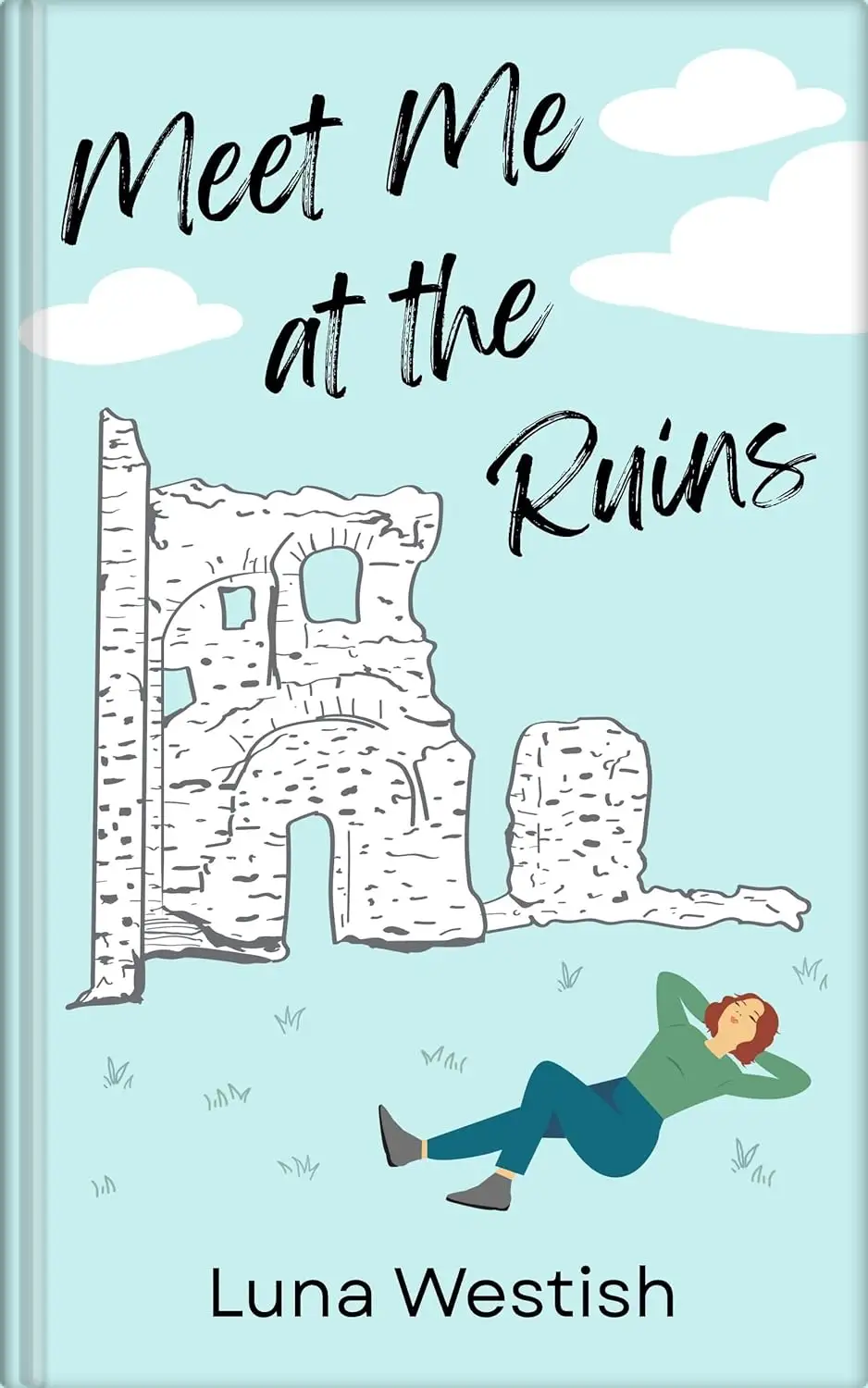
Meet Me at the Ruins book cover
A quiet Edinburgh landscape, where ruins and solitude hold equal weight.
Author conversation

With Luna Westish

Luna Westish answers our questions about Meet Me at the Ruins

We asked about the book’s origin, cover, writing process, atmosphere, and intended reader experience — then shaped those answers into this feature.

Origin

Why this book exists

Meet Me at the Ruins begins in lived texture rather than pure invention. Westish shares that it is “verrrrrry loosely based” on her own study abroad time in Scotland in the early 2000s, but she is careful to separate herself from her protagonist. What seems to have drawn the author back to that setting was not nostalgia alone, but the chance to write a young woman moving through unfamiliar rooms, social missteps, and private spirals while trying to build a life that feels like her own. The result is a book rooted in place, uncertainty, and the search for steadier ground.
On why this book exists

“This book is verrrrrry loosely based on my study abroad experience in Scotland in the early 2000s.”

Behind the book

The human story behind it

The personal thread here is clear: the author knows the emotional weather of anxiety, overthinking, and saying the wrong thing. In details shared with IndieBookStories, Westish explains that both she and Margo experience anxiety and “make lots of social mistakes,” even while insisting that Margo is “very much her own person.” That distinction matters. This is not a one-to-one retelling, but a novel shaped by recognition. Westish points to a version of young adulthood that is less polished than many fictional versions: awkward, observant, desirous, and often unsure. For readers, that gives the book its human scale and its honesty.
A young woman runs through a cold stone city street with a thoughtful expression.
The story's inner weather appears in motion: cold air, old stone, and a mind that keeps turning.
On preserving the human story

“A young woman running on a cold day, a pensive look on her face.”

The story's inner weather appears in motion: cold air, old stone, and a mind that keeps turning.

Reader experience

What kind of journey is this?

On the story’s pace and mood

“Feels like real life, not the idealized characters we often see in a book or on screen.”

This is a contemporary novel with a contemplative pace and a close attention to inner life. The author describes the narrative as “contemplative, exploring, self-reflective,” and says it “feels like real life, not the idealized characters we often see in a book or on screen.” Expect a reading experience built from emotional texture: longing, uncertainty, study-abroad freedom, social experimentation, and moments of pleasure that arrive quietly rather than theatrically. Edinburgh's old stone atmosphere, coffee shops, runs through the cold, museums, ruins, and nights around a bonfire all help shape the mood. It is less about neat transformation than about watching someone slowly notice what makes life feel bearable, vivid, and hers.
Inspired by the story world

A visual glimpse into the book’s atmosphere

The images around Meet Me at the Ruins draw from details Luna Westish shared with IndieBookStories: cold Edinburgh air, ancient stone ruins, pensive runs, coffee-shop corners, and students gathered by firelight in a season of self-discovery.

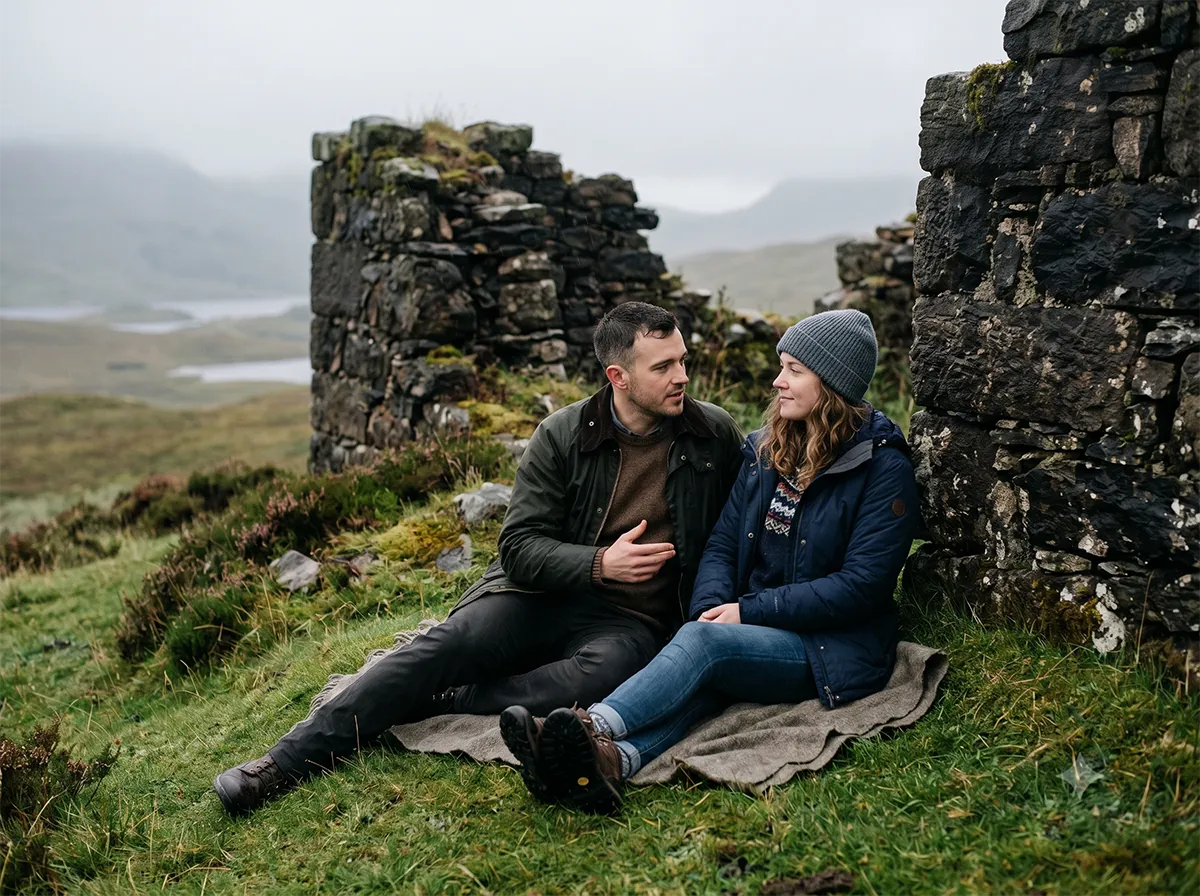
A man and woman sit together by stone ruins on a hill, talking quietly.

Conversation in the Ruins

One of the book's key images: closeness held inside an old, open place.

A coffee shop table with an Americano, notebook, and laptop near a wall outlet.

Coffee Shop Writing Mood

Westish's writing world was shaped in coffee shops, with an Americano and a place to plug in.

College students gathered around a bonfire at night, listening together in winter.

Burns Night Bonfire

A social world made of warmth, poetry, and the uncertainty of finding your place within it.

Reader response

How readers may feel

Readers who have known anxiety may find something recognisable here. The author shares that many readers say they “feel seen,” especially in Margo's overthinking, messiness, and social uncertainty. Even for readers who do not share that exact experience, the novel may offer a sense of closeness to a mind trying hard to make sense of new surroundings, new desire, and a changing self. Rather than pushing toward tidy catharsis, it seems more interested in recognition, companionship, and the relief of being understood.
Reader fit

Who this book is for

This book may suit readers who like contemporary fiction grounded in emotional realism rather than dramatic twists. If you are drawn to campus or study-abroad settings, early-2000s atmosphere, interior narration, and characters who are not especially polished, this is likely to speak to you. It is also a good fit for readers who want stories about anxiety that do not reduce a character to that single trait. If you enjoy novels where longing, friendship, place, and small daily pleasures carry real weight, Meet Me at the Ruins offers that kind of reading life.
A useful note

Who this may not be for

Readers looking for a fast, plot-driven novel or a heavily idealised romance may not find what they want here. Westish describes the book as contemplative and self-reflective, and the emotional focus stays close to Margo's inner life, awkwardness, and uncertainty. If you prefer stories where characters are quickly decisive, glamorous, or neatly resolved, this book may feel intentionally less polished and more open-ended.
Meet Me at the Ruins book cover
Meet Me at the Ruins
Cover story

Behind the cover

On the cover

“It made more sense for the narrative of the book if she was contentedly alone.”

The cover's central idea comes straight from the story world: the ruins themselves. But the most telling choice is the one Westish describes about Margo's presence on the cover. She shares that Margo was originally shown with a man, before she and the designer decided it made more sense if she was “contentedly” alone. That small shift says a great deal about the novel's emotional center. However important attraction and connection may be, the deeper story seems to be about a woman learning to inhabit her own solitude differently.
L
Author

Luna Westish

Profile details supplied to IndieBookStories.

Writing room

From the author’s desk

Westish shares that the book took about a year to write, followed by another year to edit, query, and publish. The writing happened wherever she could find “a good Americano and an outlet,” which feels entirely in keeping with the novel's attention to coffee, atmosphere, and small sustaining rituals. That practical, lived-in process matches the book's tone: not grand or distant, but built patiently from observation, feeling, and time spent returning to a character until her voice held.
Keep discovering

Author-led discovery from IndieBookStories

Discover more books through the stories behind them

IndieBookStories is built for readers who want more than a plot summary. Join the reader list to discover indie books through the details authors share with us about origin, mood, process, and the worlds they have made.